Ceasefire, Chaos, and Crude: What Just Happened in the World — And Where Markets Are Headed
A TradeX Research report on why the narrative flipped so quickly, and what that means for oil, volatility, and investor positioning.
Over the past few days, the global narrative flipped almost overnight. Markets moved from pricing in the possibility of wider regional escalation to reassessing a sudden ceasefire and the possibility of controlled de-escalation.
That shift matters because modern markets do not wait for certainty. They move on headlines, perceived probabilities, and the speed at which participants are forced to reprice risk.
The key questions now are not just what happened, but what changed in the incentives of the major players, what remains unresolved beneath the surface, and how investors should interpret the current calm.
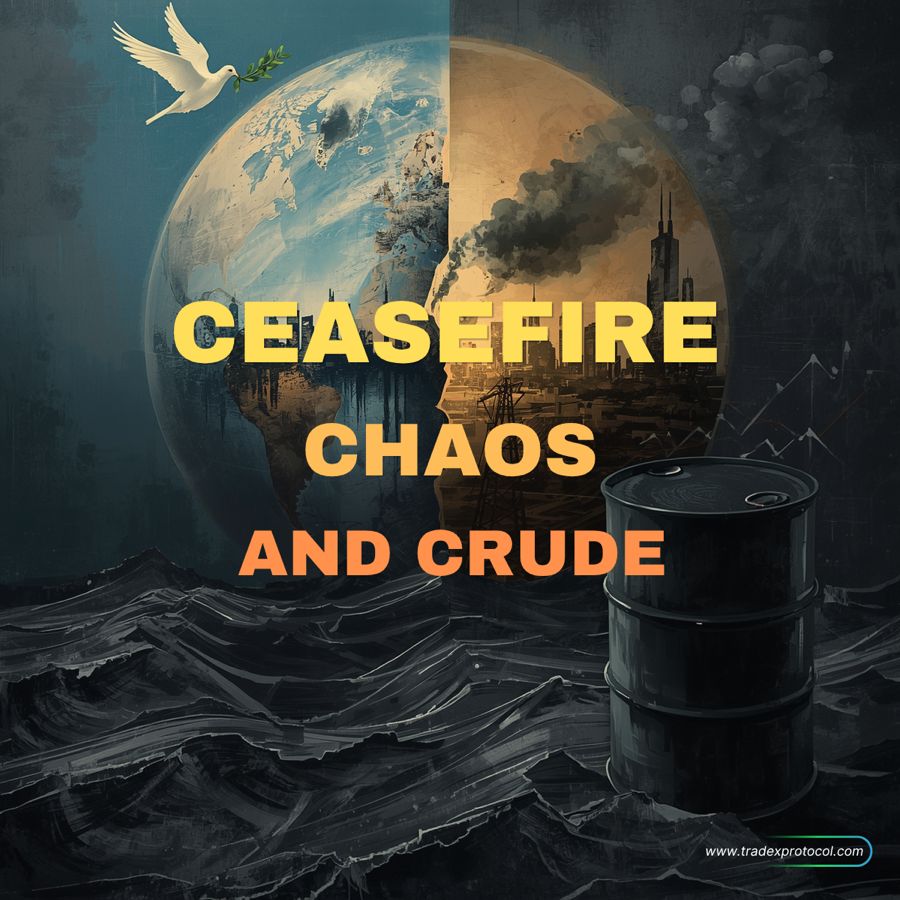
The ceasefire changed the tone, but not the underlying fragility. What markets are pricing now is not resolution, but a pause in immediate escalation risk.
From Escalation to De-Escalation in 48 Hours
The market backdrop was already tense. Investors were watching rising pressure involving Iran, increasingly sharp geopolitical rhetoric, and the possibility that a localized confrontation could spill into a broader disruption across energy markets.
In that environment, market expectations became straightforward:
- Crude oil would spike on supply fears
- Equities would weaken as risk appetite contracted
- Safe-haven assets such as gold and the US dollar would attract defensive flows
Then came the ceasefire announcement. In practical terms, that meant the market had to reverse part of a fear-driven pricing move almost immediately. Relief replaced panic, but only partially, because traders understand that ceasefires often interrupt volatility rather than eliminate it.
Why the Sudden Ceasefire Was Not Random
Abrupt geopolitical reversals often look chaotic from the outside, but they are usually rooted in incentive alignment behind the scenes. A ceasefire of this kind is rarely spontaneous. More often, it is the visible result of economic pressure, risk control, and quiet diplomacy.
Economic Pressure
No major power benefits from extended supply disruption at a time when inflation remains sensitive and growth expectations are still uneven. A prolonged shock would feed directly into transport costs, manufacturing margins, consumer prices, and rate expectations.
Oil Market Sensitivity
The closer tensions move toward the Strait of Hormuz, the more difficult it becomes for policymakers and markets to remain calm. The route is too important to ignore, and even rumors of disruption can produce immediate market reaction.
Political Optics
Leaders gain more from appearing in control than from allowing uncertainty to spiral without boundaries. In high-pressure moments, narrative management becomes a policy tool in itself.
Backdoor Diplomacy
Ceasefires are often negotiated before they are publicly acknowledged. The announcement may seem sudden, but the groundwork is frequently laid through indirect channels long before the market hears anything official.
The Strait of Hormuz Is the Real Flashpoint
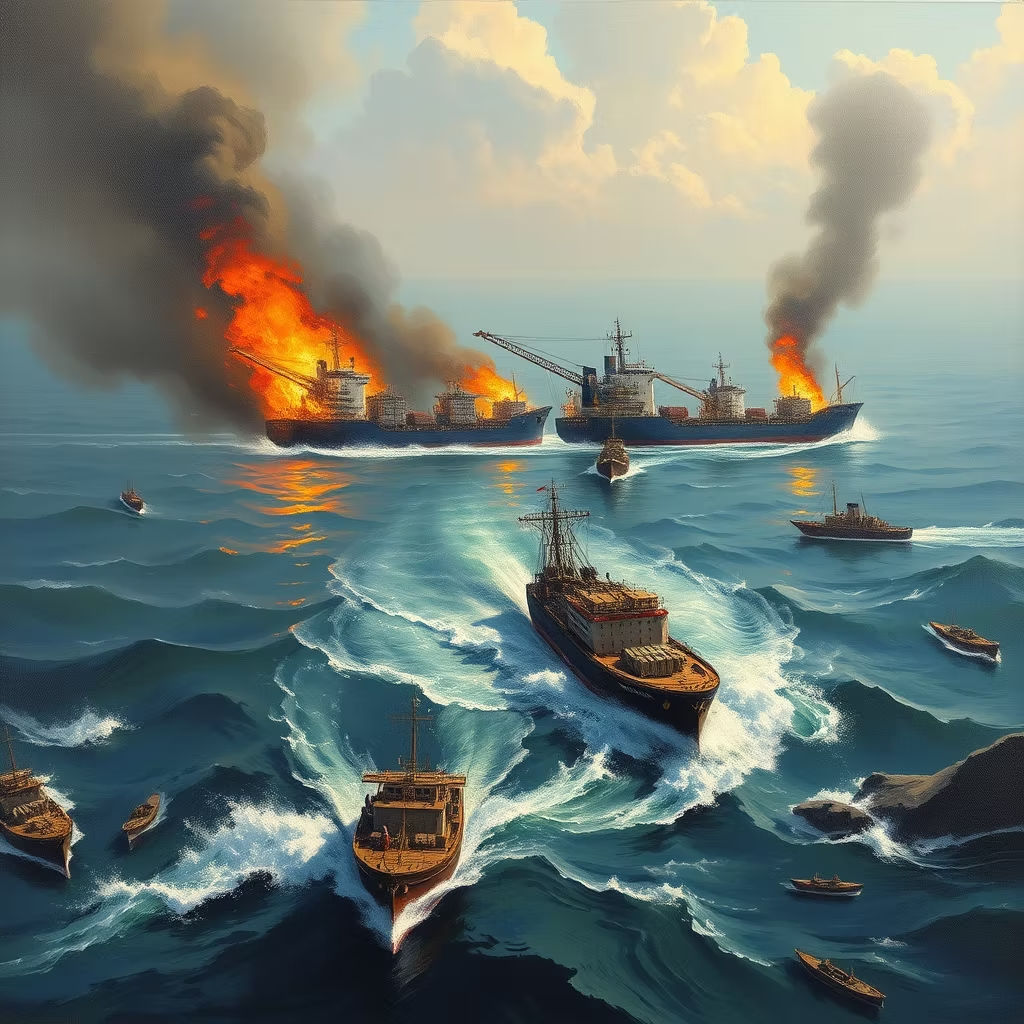
The core of the problem is not simply Iran as a headline. It is the geography of global energy flow. The Strait of Hormuz remains one of the most critical oil chokepoints in the world and accounts for a substantial share of global crude transport.
Any threat to that route creates immediate consequences:
- Oil prices react almost instantly
- Shipping and insurance costs rise quickly
- Regional military risk gets repriced into global macro expectations
This is why markets can move violently even before physical supply is materially interrupted. In energy-sensitive environments, expectations alone are enough to create large price dislocations.
Trump’s Role: Strategy, Signaling, or Both?
Donald Trump’s rhetoric and subsequent signaling toward working on a plan changed the tone of the narrative. Markets tend to read those kinds of statements through a strategic lens rather than a purely political one.
His positioning can be interpreted in several ways:
- An effort to present himself as a negotiator rather than an escalator
- An attempt to calm global sentiment without conceding leverage
- A way to maintain optionality ahead of broader political goals
For markets, the takeaway is simple: if major actors appear open to controlled diplomacy, the probability of immediate uncontrolled escalation declines, even if the long-term picture remains unstable.
What Changed Overnight
Before the ceasefire, price action was dominated by fear. Defensive positioning strengthened, volatility rose, and risk assets became more vulnerable to headline shocks.
After the ceasefire, the market began to price in a different short-term path:
- Potential relief across risk assets
- Oil stabilizing rather than continuing its fear-driven spike
- Selective return of risk appetite
But the important distinction is this: the risk has not disappeared. It has merely moved from immediate escalation to deferred instability.
Where Markets Stand Right Now
The current landscape is best understood as a relief phase inside a still-fragile macro regime.
Crude Oil
Oil remains elevated because the structural risk premium is still present. Traders no longer have to price the worst-case scenario with the same urgency, but they also cannot assume the supply route is fully secure.
Gold
Gold continues to hold relevance as an uncertainty hedge. Even if safe-haven demand moderates during moments of calm, geopolitical fragility and inflation sensitivity continue to support the metal.
Equities
Equity markets may enjoy short-term relief, but sentiment remains conditional. Any renewed escalation or shipping disruption would quickly challenge that rebound.
Forex
The US dollar remains highly responsive to shifts in risk sentiment. In a headline-driven environment, forex markets often reprice faster than slower-moving asset allocators.
Why This Is Not Over
Ceasefires in geopolitics are often better understood as tactical pauses than final resolutions. They create time, but they do not automatically remove the underlying disagreements that made conflict possible in the first place.
These pauses function as:
- Temporary breathing space
- Strategic reset points
- Negotiation windows
Underneath the calmer tone, the deeper tensions remain unresolved. That means markets must continue treating the situation as active risk, even if the most immediate pressure has eased.
The Bigger Game: Controlled Instability
One of the more important ways to read the current environment is through the idea of managed tension. Global powers often prefer controlled instability to uncontrolled conflict.
That approach preserves leverage while avoiding the economic fallout of a full breakdown. It allows political actors to project strength, negotiate from a position of pressure, and keep strategic optionality intact.
This is also why markets can swing sharply without fully breaking. Participants are pricing instability, but not necessarily systemic collapse.
What This Means for Investors
This environment does not reward emotional reaction. It rewards adaptability, breadth of exposure, and the ability to interpret real-time shifts in market structure.
Conditions like this tend to favor:
- Adaptive strategies that can respond to new information quickly
- Multi-asset positioning that reduces dependence on a single narrative
- Process-driven execution rather than reactive decision-making
They tend to punish:
- Emotion-led trading
- Static portfolios with concentrated exposure
- Overconfidence in a single headline outcome
Where We May Be Headed Next
In the short term, volatility is likely to remain elevated because headlines can still reshape expectations quickly. The ceasefire may reduce immediate fear, but it does not remove the structural sensitivity of crude, shipping, or global risk sentiment.
In the medium term:
- Oil is likely to remain structurally sensitive to geopolitical headlines
- Gold should continue to retain support as a hedge against uncertainty
- Equities may grind higher, but with fragile conviction
In the longer term, one trend appears increasingly durable: geopolitical instability is no longer an exception. It is becoming part of the operating environment that investors must learn to navigate as a baseline condition.
Final Thought
What we just witnessed is not stability. It is controlled uncertainty.
The shift from escalation to ceasefire is not a final resolution. It is a recalibration of risk, incentives, and expectations. Markets are not waiting for clarity. They are moving on anticipation, and that makes discipline more valuable than ever.
TradeX Perspective
At TradeX, this is exactly the kind of environment our systems are built for. Our automated trading engine continuously adapts to volatility, macro events, and real-time shifts in sentiment across gold, forex, and commodities.
The goal is not to predict every headline. It is to operate with structure, discipline, and responsiveness when markets become unstable and emotionally driven.
Recent Posts